Article: The Story of the Cannelé
The Story of the Cannelé
The Story of the Cannelé: Bordeaux’s Iconic Pastry Explained
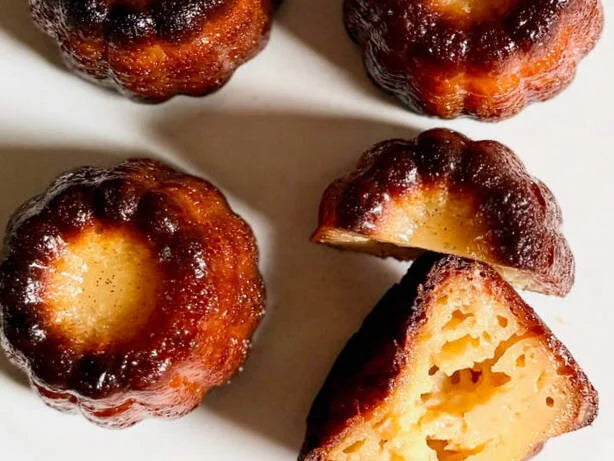
Tucked away in the shadow of Bordeaux’s grand châteaux and sun-drenched vineyards lies a small but mighty pastry with a cult following: the cannelé. With its deeply caramelised crust, soft custardy centre, and subtle notes of vanilla and rum, this little treat is a perfect example of French culinary restraint — and brilliance.
At The Little Food Market a few weeks ago, many people asked what a cannelé is, bought one to try and returned for more!
But where did it come from? And why has it captured hearts (and cravings) around the world?
A Humble Beginning
The origin of the cannelé is as delightfully mysterious as its texture. Some say it was created by nuns at the Couvent des Annonciades in the 18th century. Others suggest it emerged from the hands of Bordeaux winemakers’ families, who used up leftover egg yolks — a by-product of wine filtering — by transforming them into sweet baked goods.
What we do know is that the cannelé is an ode to simplicity and cleverness: eggs, milk, flour, sugar, butter, vanilla, and rum. That’s it. But the magic lies in the contrast — the crisp, almost burnt crust giving way to a trembling, custard-like interior.
Baked slowly in traditional copper moulds (we use silicone at home!), the batter is rested for up to 48 hours to allow the flavours to develop and the texture to become perfectly elastic.
A Treat Close to My Heart
Growing up in Paris, cannelés weren’t something we made every day — they were special. Something you’d find in a good bakery, or perhaps as a petit four served at the end of a long Sunday lunch. I fell in love with them as a child: their chewy, almost smoky edges and soft heart reminded me of crème caramel but in portable, bite-sized form.
When I moved to Melbourne and began sharing French baking with my customers, I knew I had to include cannelés. But I also knew how intimidating they can seem — they look fancy, mysterious, and fiddly. And yes, the batter does require a little patience.
Do we spell CANNELE or CANELE
There are two spellings for cannelé, The spelling "cannelé" (with two "n"s) is the traditional spelling, while "canelé" (with one "n") was adopted in 1985 by the Confrérie du Canelé de Bordeaux to distinguish their specific version of the pastry. Both are correct, but "canelé" is the name recognized by the official Bordeaux association.
Making Cannelés at Home — The Easy Way
That’s why I created the By Josephine Préparation Artisanale Cannelé Baking Mix. It’s the closest thing to the cannelés of my childhood — but simple enough to bake in your own kitchen. The mix uses quality Australian ingredients and a cherished French family recipe, with no preservatives or artificial flavours. All you need to add is milk, butter, and eggs — and a little patience for the resting time.
Whether you bake them in a traditional mould or a silicone tray, you’ll get that beautiful contrast of crunchy exterior and soft, custardy centre. Perfect with a coffee, a glass of dessert wine, or eaten straight from the cooling rack (which happens often in our house).
A Little Taste of Bordeaux
If you’re ever in or near Bordeaux, we highly recommend stopping by Canelés Baillardran, our favourite place for the real thing. Their cannelés are iconic, and the perfect benchmark for this beautiful pastry. It’s always a highlight when we visit, and a delicious reminder of why this humble treat is so beloved and you can choose the colour to your cannelé taste.
Until then, bring a little of that Bordeaux magic into your own kitchen — with a little help from our baking mix.
Bon appétit,
Josephine

Written by Josephine Acker